A record year for gold in 2025 reshapes gold’s role in investment portfolios
22. 12. 2025Miroslava Sojkova, Social Media Director
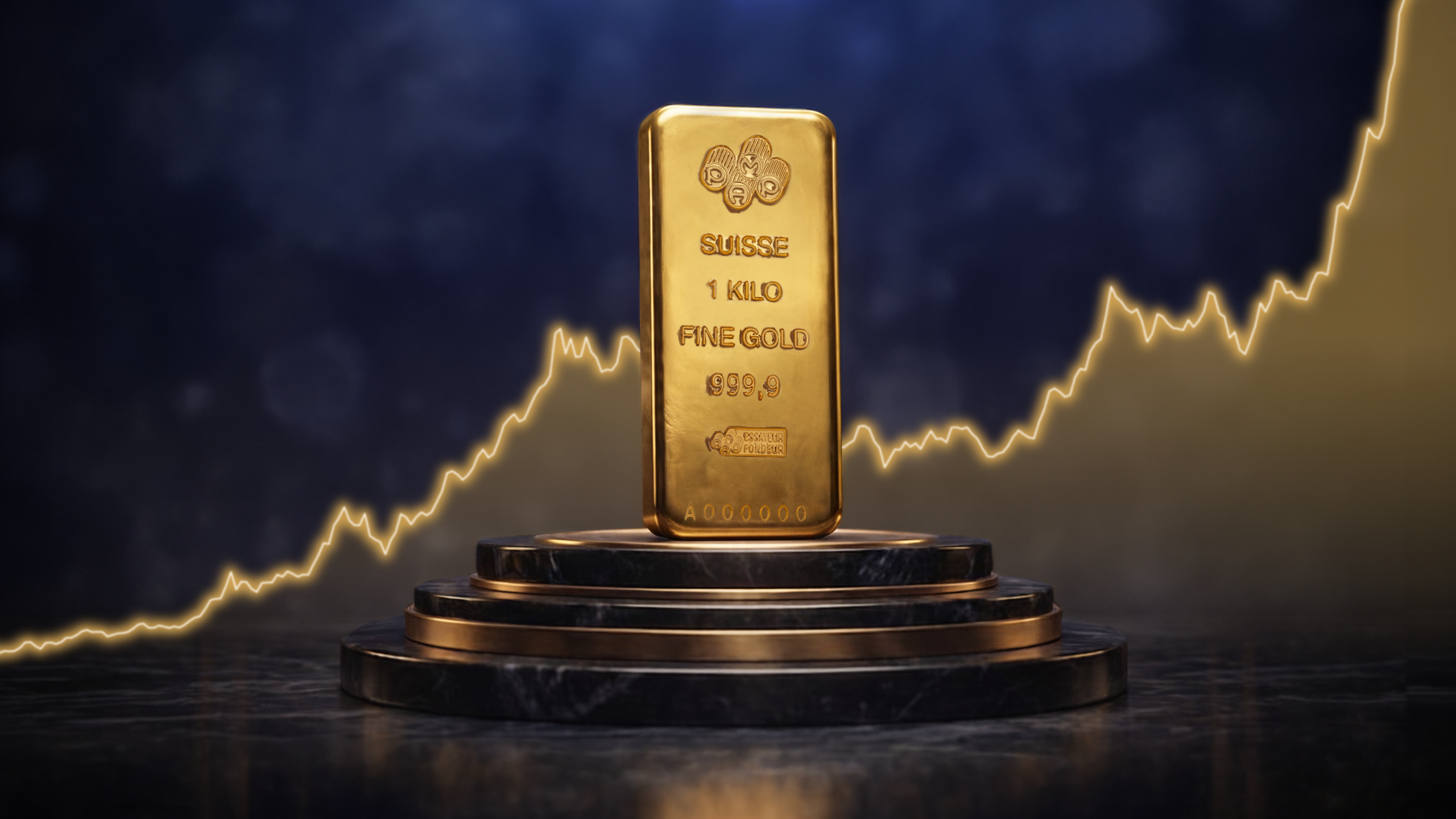
2025 will enter investment history as the year that definitively altered the role of gold in investors’ portfolios. The price of gold surged above USD 4,400 per ounce and – more importantly – has remained at these levels despite mixed signals from the Fed (the US central bank). Bloomberg sees this not as a short-term market reaction, but as evidence of a deeper, structural trend redefining the place of gold in modern investment practice.
Why gold is no longer just a hedge, but a portfolio mainstay
Gold’s current rise is not simply the result of investor concern. Rather, it reflects systematic changes in the global financial landscape. Central banks around the world continue to purchase gold at record levels, confidence in fiat currencies is gradually weakening, and the traditional 60/40 equity-and-bond investment model is no longer the reliable stabilising force it once was.
Rising public debt, geopolitical uncertainty, and persistent inflationary pressures are making it increasingly clear that bonds may not always fulfil their traditional role as a counterweight to equity market fluctuations. This is precisely why a growing number of investors are seeking assets that are not directly tied to monetary policy or the performance of traditional financial markets. Gold is thus moving back into the spotlight as a real, globally trusted asset.
“Gold is no longer confined to a supplementary role in portfolios.” — Filip Horáček, IBIS InGold Sales Director
As our Sales Director, Filip Horáček, has long pointed out, the rules of diversification are changing, with gold evolving from a compass in turbulent times into a stable portfolio anchor that can protect wealth while also increasing its value in periods of heightened uncertainty.
Gold price forecasts for 2026 confirm the shift
Forecasts for 2026 from major investment banks and analysts are consistent with this more prominent role for gold:
- Goldman Sachs predicts that the price of gold could climb to approximately USD 4,900 per ounce by the end of 2026 under its base scenario, driven by continued central-bank buying and expectations of interest-rate cuts by the FED.
- J.P. Morgan sees further upside, with prices around USD 5,055 per ounce in the final quarter of 2026, as falling rates, fiscal-sustainability concerns, and investor diversification combine to underpin precious metals.
- Morgan Stanley expects prices to rise to approximately USD 4,800 per ounce by the end of 2026, while stressing that even slower growth would still be very positive overall.
These forecasts indicate that gold continues to be regarded as a bullish asset with growth potential, even in periods when the market may experience short-term corrections or volatility.
Recommendations for the ordinary investor
For the ordinary investor today, the following applies:
- Gold is not a speculative asset that is hard to grasp, but one that responds to fundamental factors: geopolitical uncertainty, high deficits, a weakening dollar, concerns about inflation, as well as a new balance of power and the changing standing of the world’s economies.
- Holding gold over the long term provides stability and protects wealth even when traditional assets such as equities and bonds exhibit greater volatility.
- Experts often recommend allocating part of a portfolio (for example, 5–10%) to gold in order to improve diversification and protect against unexpected market shocks. Others openly speak of a much higher percentage (20–40%).
Why 2025 is not a peak, but a transition into a new era
Rather than marking the definitive end of the so-called “gold cycle”, 2025 looks more like a period of transition, as investors increasingly reassess the role of real assets in their portfolios. Instead, it points to a shift towards a new investment paradigm, in which real assets such as gold once again play a key role in protecting and growing wealth over the long term. Gold is moving from a marginal alternative to a strategic component of the modern portfolio – and this realignment stands out as one of the most pronounced trends in today’s investment landscape.