Who decides what happens to your money?
08. 09. 2026Bc. Miroslava Sojková, Social Media Director
It is interesting to see how attitudes towards private savings have changed in recent years. Europe is asking how to channel savings into the economy. Companies are looking for capital to fuel further growth. Banks are seeking ways to make more effective use of deposits. And the investment industry is offering ever more options for where to put your money. Each has its own economic rationale.
But amid all these questions, one fundamental point should not be overlooked: what do you want to do with your wealth?
The question is not where the state wants to direct it, where the bank wants to invest it, or where most of the market is heading. It is about what makes sense for you. Diversifying your wealth is not just about returns; it is also about how much you want to keep directly under your control and how you want to hold it. And in Europe, that question is taking on a new dimension.
Europe is looking for capital to fund its future
The European Union is grappling with a problem that may, on the face of it, seem paradoxical. Europe is not short of money: according to the European Commission, households across the EU hold approximately €10 trillion in savings in bank accounts. Yet a substantial share of European savings is flowing out of Europe.
Meanwhile, European companies need capital to finance growth, innovation, digitalisation, energy, and new technologies.
The money is there, and so is the need for investment. The challenge is bringing the two together.
That is one of the aims of the European Commission’s Savings and Investments Union, which is designed to steer more private savings into productive investment and help finance European businesses.
In August 2026, European Commission President Ursula von der Leyen put the issue firmly back on the agenda. Speaking in Paris, she called for European savings to be put “to work” and drew attention to the volume of capital flowing out of Europe.
The sums involved are considerable. The European Commission estimates that Europe will need approximately €750–800 billion in additional investment each year until 2030.
Why Europe wants more investment at home
The logic is simple. Savings invested by European households in European companies help finance businesses in Europe. Money that flows out of the EU supports growth elsewhere.
Around €300 billion in savings leaves the EU every year, according to figures used in developing the Savings and Investments Union, with a significant share going to the United States. So the European debate is no longer simply about encouraging people to invest more. Increasingly, it is about where that money ends up. And that is pushing private savings higher up the economic-policy agenda.
What does this mean for you?
For a moment, leave Brussels, the banks, and big European companies aside. Behind all those figures are people: people setting aside part of their income, building up a financial cushion, investing, and deciding what to do with their money next.
Europe can create new investment opportunities. Banks can launch new products. Investment companies can develop new solutions. Businesses will continue to need capital. All that is a natural part of a functioning economy.
But anyone building wealth has another question to consider: how do I want to hold it?
Not all your wealth has to be a number on a screen
Bank accounts are practical. They make it easy to pay, receive money, and build up a reserve.
Shares, funds, and bonds offer another way to participate in economic growth and increase your wealth over the long term.
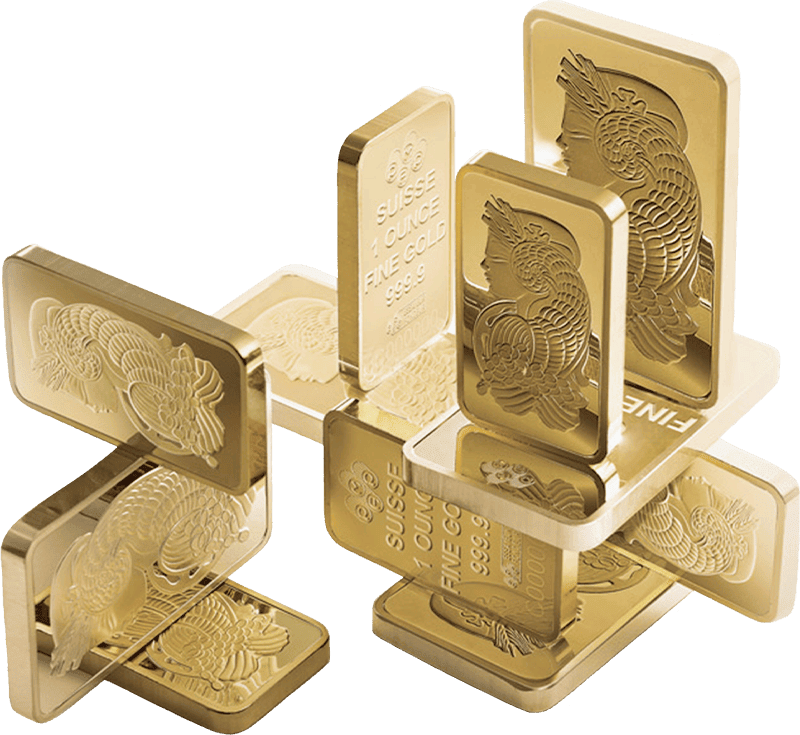
But there is another way to hold wealth: directly, in physical form. A gold coin or investment gold bar is a tangible asset. It is not money in an account, a figure in an investment app, or a holding in a fund. It is an asset you own directly.
Of course, gold is not risk-free. Its price fluctuates, and returns cannot be guaranteed, so it should not make up your entire wealth. But its very difference from financial assets is one reason investors may choose to include it in a diversified portfolio.
In today’s economy, we have become used to much of our wealth existing as records: a bank balance, a figure in an investment app, a fund holding, or an electronic record of securities ownership. It is convenient, fast, and efficient.
But that is precisely why it can be appealing to hold part of your wealth in a form that seems much simpler at first glance. A piece of physical gold. It does not have to be a bet against banks, investments, or the European economy. It can simply add another layer of diversification: an asset you own directly rather than solely as a number on a screen.
Who decides what happens to your money?
Europe is looking at how its vast pool of private savings can help finance future development. Companies are looking for capital. Banks, investment companies, and financial markets are finding new ways for people to invest.
All of that is a natural part of the economy. But one thing should not get lost in the debate: it is your wealth.
So it makes sense to decide for yourself what happens to it. Not because something happens to be popular, simply because the market recommends it, or because someone else tells you where your money should go. The question is what you want to own, why you want to own it, and what role each asset should play in your financial plan.
Diversification is not just about returns. It is also about what you own. And if you want to hold part of your wealth directly in a physical asset, investment gold is one option.
Sometimes putting your money to work is only part of the story. It is also about keeping part of your wealth simply yours.